Lake View Locksmith Chicago Service Team
Local locksmith team
Jun 10, 2026 13 min read
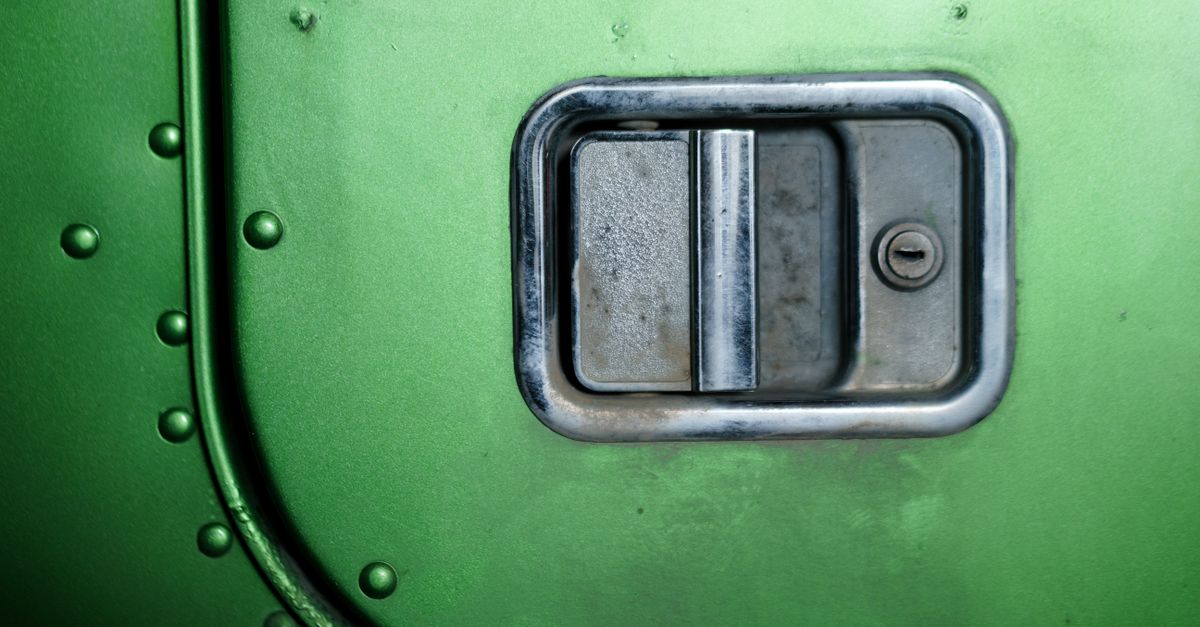
Chicago winters don't play fair with door knob locks. When the temperature on the North Side drops into the single digits — the kind of cold that rolls off Lake Michigan and settles hard over neighborhoods like Lake View and Lincoln Park — the metal components inside a knob lock can contract, moisture can freeze inside the cylinder, and what was a perfectly functional door knob with lock and key yesterday becomes an immovable chunk of metal today. It happens fast, and it almost always happens at the worst possible moment: late at night, early in the morning, or right before you need to leave for work.
The good news is that not every frozen or stiff lock requires an emergency locksmith call. Several causes are easy to diagnose and fix yourself with items you may already have at home. But some situations — a seized mortise lock, a damaged cylinder, a door that has shifted on its frame — genuinely do need a trained professional. This guide walks you through the most common reasons a door knob lock stops turning in Chicago cold, what you can safely try on your own, and exactly when it makes sense to pick up the phone and call for help.
## Why Cold Weather Makes a Door Knob Lock Seize Up
Metal contracts when temperatures fall. Inside a door knob with lock, that means the small pins, springs, and plug inside the lock cylinder all tighten against each other. Add any residual moisture — from rain, snow, or even humid indoor air venting through a drafty frame — and you get ice forming directly inside the mechanism. Chicago's freeze-thaw cycle makes this worse: water works its way in during a mild afternoon, then locks solid overnight when the wind chill drops below zero along the lakefront corridor. The result is a lock that either turns with enormous resistance or refuses to move at all.
A second factor is lubricant breakdown. Most residential door knob locks come from the factory with a light grease or dry lubricant inside the cylinder. Over several Chicago winters, that lubricant thins out, attracts grit from the street, or gets washed away entirely. Without it, metal-on-metal friction increases dramatically in the cold. If you have not serviced a knob lock on an exterior door in the last year or two, degraded lubrication is likely part of the problem.
## The Most Common Causes — and What You Can Try First
Before calling anyone, run through this checklist. First, check whether the issue is the lock itself or the door. A door that has swollen, shifted, or settled in its frame may bind the latch or deadbolt so that turning the knob moves nothing. Try lifting the door handle slightly while turning — this takes pressure off a misaligned strike plate and can free a binding latch in seconds. Second, inspect the keyway. Ice or compacted debris inside the keyhole will stop a key from seating properly. A small flashlight and a can of compressed air can clear a surprising amount of obstruction without any tools. Third, if you can see or feel that the cylinder is iced, use a proper lock de-icer spray — available at most hardware stores on Belmont Avenue or Clark Street — or apply a small amount of isopropyl alcohol (70% or higher) to the key before inserting it gently. Alcohol lowers the freezing point of water and can melt a thin ice plug within a minute or two. Never use water, and never force a key by torquing it hard; a key bent or broken inside a frozen cylinder turns a solvable problem into an emergency.
If de-icing does not work, consider lubrication. Graphite powder or a Teflon-based spray (not WD-40, which attracts dirt and degrades rubber seals) applied to the keyway and worked in by gently cycling the key can restore movement on a dry, friction-seized cylinder. If you have a door knob with lock for a bedroom or interior door that suddenly stiffens in winter, the cause is almost always frame shift rather than ice — look for daylight gaps around the door edges and check whether the latch is hitting the strike plate cleanly.
## When a Mortise Lock or Older Mechanism Is the Real Problem
Many Chicago greystone and two-flat buildings — especially those built before 1960 in neighborhoods like Lake View, Wrigleyville, and Roscoe Village — use mortise lock hardware rather than standard cylindrical knob locks. A mortise lock is a rectangular cartridge set into a deep pocket (mortise) cut into the door edge, and it operates differently from a simple knob lock. When a mortise lock seizes in cold weather, the issue often goes beyond a frozen cylinder: the internal cam, bolt, and lever assembly can all bind simultaneously, and improper DIY attempts can shear the cam or strip the tailpiece, making the door permanently inoperable until a professional replaces the entire unit.
Servicing a mortise lock correctly requires removing the lock body from the door, disassembling it, cleaning and re-lubricating the internal parts, and reinstalling it with correct alignment. This is precisely the kind of work our experienced team at Lake View Locksmith Chicago handles every day — not just the emergency unlock, but the full diagnosis that tells you whether your existing mortise lock can be saved or needs to be replaced with a modern equivalent. If you have an older mortise lock on an exterior door and it has been stiff for more than one season, do not wait for a complete failure on a January night. Call 773-830-2610 and let us take a look before it becomes an emergency.
## Emergency Locksmith Situations: When DIY Has Reached Its Limit
There are four scenarios where you should stop experimenting and call an emergency locksmith immediately. One: your key broke off inside the cylinder. Trying to extract a broken key with a pin, paperclip, or screwdriver almost always pushes the fragment deeper or damages the pins, making extraction harder and more expensive. Two: the lock turns freely but the bolt or latch does not move — this typically means an internal component has snapped and the door knob with lock and key is functionally dead. Three: the door has been forced or tampered with, showing visible damage around the face plate or strike. Four: you are locked out of the property entirely with no access through another door or window. In every one of these situations, the right move is a phone call, not continued force.
As a commercial locksmith as well as a residential one, our team also responds to business lockouts on storefronts, offices, and multi-unit buildings across Chicago — because a frozen lock on a Lake View coffee shop at 5:30 a.m. before the morning rush is just as urgent as a frozen lock on a residence. Whatever the property type, we carry the tools and replacement hardware to handle mortise locks, cylindrical knob locks, deadbolts, and high-security cylinders on the same visit. We are available 24 hours a day, 7 days a week, including during polar vortex events when frozen locks are at their peak. If you are locked out right now, call 773-830-2610.
## Prevention: How to Keep Your Door Knob Lock Working All Winter
The most effective thing you can do is lubricate every exterior lock cylinder before the first hard freeze — typically in late October or early November in Chicago. Use a graphite or Teflon-based lubricant, insert the key, and cycle it several times to work the lubricant throughout the pins and plug. Then apply a small amount to the latch bolt and any exposed metal on the door knob with lock face plate. If your door has a mortise lock, annual professional servicing — where the lock body is removed and all internal parts are cleaned and re-lubricated — is worth considering, particularly for locks that are more than ten years old.
Beyond lubrication, weatherstripping helps more than most homeowners realize. A tight seal around the door frame keeps cold air from funneling directly onto the lock cylinder and dramatically reduces condensation buildup inside the mechanism. Also consider installing a lock cover — a small magnetic or plastic flap over the keyhole — on any exterior door that faces north or west and takes the full force of Chicago's prevailing winds. Finally, keep a small de-icer spray in your car during winter months. The one morning you cannot get back into your house after clearing the driveway is exactly when you will wish you had it. If a lock fails despite good maintenance, our residential locksmith team can assess whether the hardware itself has reached the end of its useful life and recommend a direct replacement that will perform reliably through many more Chicago winters.
## Understanding Locksmith Costs in Chicago — What Actually Drives the Price
Two of the most common questions we hear are: How much does a locksmith cost in Chicago, and how much does a local locksmith charge for a frozen lock call? The honest answer is that the final price depends on several specific factors — and any locksmith who quotes you a firm number before seeing the lock, the door, and the situation is guessing. The factors that shape the actual cost include the type of lock (a standard cylindrical knob lock costs less to service than a mortise lock that requires full disassembly), the time of day (after-hours and emergency calls involve different logistics than a scheduled daytime visit), travel distance within the Chicago metro area, and whether replacement parts or new hardware are needed on the spot.
At Lake View Locksmith Chicago, we confirm an exact up-front price before any work begins — no surprise charges after the job is done. We also want to address a question that comes up often: How do I know if a locksmith is legit? A trustworthy locksmith will always arrive in an identifiable vehicle, carry verifiable identification, explain the work needed in plain language before starting, and provide a written or confirmed price up front. They will also verify that you have the right to access the property before doing any work. Our team is insured and trained to handle every lock type we encounter, from a simple residential door knob lock to a complex commercial mortise lock installation. If you have questions before booking, call 773-830-2610 — we answer every call, around the clock.
## Our Full Range of Services for Chicago Homeowners, Drivers, and Businesses
Lake View Locksmith Chicago is a fully mobile, 24/7 operation serving the entire Chicago area. Our services include: residential lockout assistance, commercial lockout response, automotive lockout service, mortise lock repair and replacement, cylindrical knob lock installation and rekeying, deadbolt installation and upgrade, high-security cylinder upgrades (including Schlage and Kwikset), master key system design for multi-unit buildings, lock rekeying after a move or lease change, broken key extraction from any lock type, frozen lock diagnosis and repair, door knob with lock replacement for interior and exterior doors, smart lock installation and troubleshooting, access control system installation for businesses, storefront lock repair, sliding door and patio lock service, mailbox lock replacement, garage side-door lock installation, safe opening and combination change, car key cutting and programming, transponder key duplication, ignition lock cylinder repair, car lockout response for all makes and models, lock hardware consultation for new construction and renovation projects, emergency board-up coordination after a break-in, and after-hours commercial locksmith response for property managers. Whether you manage a vintage Lake View greystones or a modern Wrigleyville condo building, we have the hardware knowledge and field experience to match the right solution to your specific door and frame.
## A Note for South Side and Citywide Callers
We frequently get asked: What are some good locksmiths on the South Side of Chicago? Our mobile team covers the full city — from Rogers Park in the north to Beverly and Pullman in the south, and from Oak Park in the west to the lakefront. We know that frozen lock problems do not follow neighborhood boundaries any more than the cold does. A call from Hyde Park or Bridgeport gets the same priority and the same trained technician as a call from right around the corner on Southport Avenue. Chicago Locksmith service for us means the whole city, not just the blocks nearest our base.
## How to Pick a Door Knob Lock — And Why You Probably Should Not Try It
We get search queries about how to pick a door knob lock and how to pick a lock door knob regularly, so it is worth addressing directly. Picking a lock without authorization is illegal in Illinois, and attempting to pick your own lock without training almost always makes the situation worse — bent pins, a damaged plug, or a shear line that no longer aligns can turn a simple lockout into a full lock replacement. More importantly, it is unnecessary: a trained emergency locksmith can typically open a standard residential door knob lock faster than an untrained person could pick it, without any damage to the hardware. If you are locked out, the right call is a professional — not a YouTube tutorial and a bobby pin. Call 773-830-2610 and we will be there.
Frequently asked questions
My door knob lock turns but the door still won't open — what's happening?+
If the knob turns but the latch or bolt does not retract, the most likely cause is a disconnected or broken internal mechanism — either the spindle that connects the knob to the latch has snapped, or a cam inside the lock body has failed. In older buildings with mortise locks, a broken cam is the usual suspect. This is not something that can be fixed by de-icing or lubrication; the lock body needs to be opened, inspected, and either repaired or replaced. Call 773-830-2610 and we can diagnose it on the same visit.
How much does a locksmith cost in Chicago for a frozen lock?+
The price depends on several factors: the type of lock involved (a standard knob lock versus a mortise lock), whether parts need to be replaced, the time of day, and where in the Chicago area you are located. We never quote a number before seeing the situation, but we always confirm an exact price up front before any work begins — so there are no surprises on the invoice. Call 773-830-2610 to get a real-time assessment.
How do I know if a locksmith is legit before I let them touch my door?+
A legitimate locksmith will arrive in an identifiable vehicle, show identification when asked, explain the work needed before starting, provide a confirmed price before touching the lock, and ask for proof that you are authorized to access the property. They will never demand payment before completing the job or inflate the price after arrival. Our team is insured, trained, and follows every one of these practices on every call.
Can I use WD-40 to fix a frozen or stiff door knob lock?+
WD-40 is a water-displacement spray and a mild solvent, not a true lock lubricant. It can temporarily loosen a stiff lock, but it also washes away the factory lubricant, leaves a residue that attracts dust and grit, and can degrade rubber components inside the cylinder over time. For a frozen lock, use isopropyl alcohol or a commercial de-icer. For ongoing lubrication, use a graphite powder or a Teflon-based dry lubricant. If neither resolves the issue, call a professional rather than continuing to experiment with household products.